

Signs Your Child May Need Vision Therapy

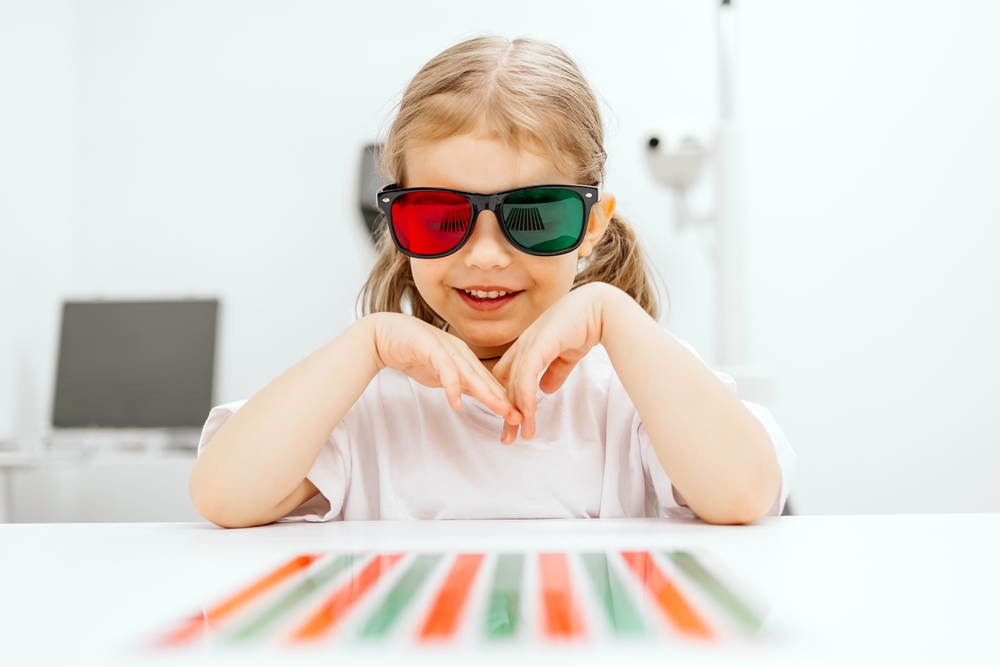
When a child struggles with reading, focus, or coordination, the issue is not always related to needing glasses. Vision therapy is a customized treatment program designed to help the eyes and brain work together more effectively. At Blue River Vision, we use vision therapy to address functional vision problems that can affect learning, comfort, sports performance, and daily activities.
Vision therapy is not simply eye exercises. It is a structured program that may help improve skills such as eye tracking, focusing, teaming, depth perception, and visual processing.
Frequent Reading Problems
One of the most common signs a child may need vision therapy is difficulty with reading. A child may have clear eyesight but still struggle to keep their place, track lines of text, or focus comfortably for long periods.
Parents may notice their child avoids reading, reads below grade level, skips words, or complains that words seem to move on the page. These signs can sometimes point to a binocular vision issue, where the eyes are not working together smoothly.
Trouble With Focus And Attention
Vision problems can sometimes look like attention problems. If a child has to work harder than normal to keep their eyes focused, they may become frustrated, distracted, or tired quickly.
Some signs to watch for include:
- Short attention span during reading or homework
- Frequent headaches or eye strain
- Covering one eye while reading
- Losing place often
- Reversing letters or words beyond the expected age
- Poor reading comprehension despite good effort
- Avoiding close-up work whenever possible
These symptoms do not automatically mean a child needs vision therapy, but they are worth evaluating through a comprehensive eye exam.
Poor Eye Teaming Or Depth Perception
Eye teaming allows both eyes to work together as one coordinated system. When this skill is weak, a child may experience double vision, blurry vision, or trouble judging distance. This can affect schoolwork, play, and sports.
Children with poor depth perception may seem clumsy, bump into objects, struggle with catching or throwing, or have difficulty with activities that require hand-eye coordination. Vision therapy may help strengthen these visual skills so everyday tasks feel more natural and comfortable.
Headaches, Eye Strain, And Fatigue
Children do not always know how to explain vision discomfort. Instead of saying their eyes hurt, they may rub their eyes, lose interest in homework, become irritable, or complain of being tired.
If headaches happen after reading, screen time, or schoolwork, it may be a sign that the visual system is under strain. A pediatric eye exam can help determine whether glasses, vision therapy, or another treatment option may be appropriate.
Why A Standard Vision Screening May Not Be Enough
School vision screenings are helpful, but they are limited. Many screenings focus mainly on distance clarity, which means a child may pass a screening and still have trouble with focusing, eye tracking, or eye teaming.
At Blue River Vision, we look beyond whether a child can see clearly on an eye chart. Our goal is to understand how their visual system functions during real-life tasks like reading, learning, and playing sports.
When To Schedule An Evaluation
If your child is struggling in school, avoiding reading, experiencing headaches, or showing signs of visual frustration, it may be time to schedule a vision therapy evaluation. Early identification can help your child feel more confident and comfortable with the tasks they do every day.
To learn whether vision therapy may help your child, contact Blue River Vision in Silverthorne, CO by calling 970-368-6539.


MAP
© 2026 Blue River Vision. All Rights Reserved - Accessibility Statement - Sitemap
Powered by: